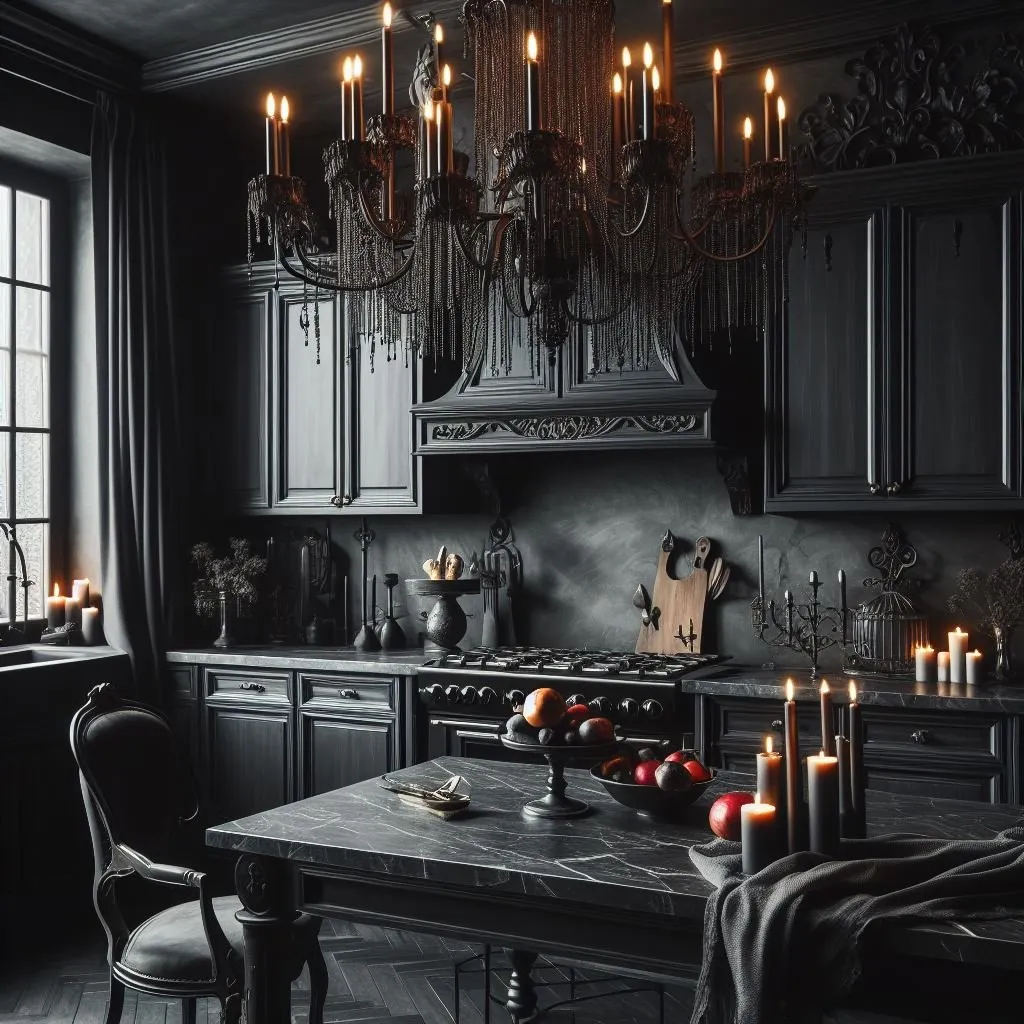
What is Gothic Kitchen Decor?
Gothic kitchen decor is a captivating and dramatic design style that draws inspiration from the architecture and aesthetic of the Gothic period. It’s characterized by dark, rich colors, intricate detailing, and a sense of mystery and elegance. Unlike the light and airy kitchens often seen in modern homes, a Gothic kitchen embraces a more moody and atmospheric ambiance, perfect for those who appreciate a touch of the macabre and a flair for the dramatic. This style allows homeowners to create a unique and unforgettable space, blending historical elements with modern functionality. It’s a bold choice, a statement of individuality, and a way to transform your kitchen into a captivating sanctuary. The goal is to create a space that feels both luxurious and intriguing, a place where you can feel transported to another era.
The Origins of Gothic Design
The Gothic style originated in 12th-century Europe, primarily in architecture. Think of soaring cathedrals, with their pointed arches, ribbed vaults, and intricate stained-glass windows. The style was a reaction against the more rigid and austere Romanesque style that preceded it, embracing a more expressive and ornate approach. Gothic design spread across various art forms, including sculpture, painting, and furniture. The hallmarks of Gothic design are its emphasis on verticality, the use of pointed arches and vaulted ceilings, and the incorporation of decorative elements like gargoyles, tracery, and stained glass. These elements contribute to a sense of grandeur, mystery, and spirituality. The influence of the Gothic period can be seen in the dramatic atmosphere and historical references that are at the heart of gothic kitchen decor, offering a unique blend of history and aesthetic.
Key Elements of Gothic Kitchen Decor

To successfully create a Gothic kitchen, focus on incorporating key elements that define the style. This includes a specific color palette, furniture with intricate detailing, and carefully chosen lighting fixtures. The use of rich, dark colors creates a dramatic backdrop, while furniture pieces with ornate carvings or embellishments add a touch of elegance. Lighting is crucial in establishing the atmosphere, with options ranging from wrought-iron chandeliers to strategically placed sconces. Accessories such as antique mirrors, candelabras, and textured fabrics further enhance the Gothic ambiance. By carefully curating these elements, you can transform your kitchen into a stunning and evocative space, a place where history and modern comfort meet in a captivating fusion.
Color Palette
The color palette is the foundation of a Gothic kitchen. It sets the tone and mood, and it’s crucial to get it right. Think of deep, saturated hues that evoke a sense of mystery and drama. Avoid bright, cheerful colors; instead, embrace the darker side of the spectrum, choosing shades that create a sense of depth and intrigue. The best gothic kitchens have colors which are moody and mysterious, creating a sense of intrigue. Don’t be afraid to experiment with a range of colors, but always keep the overall aesthetic in mind. The right color scheme can instantly transport your kitchen to another world.
Dark and Dramatic Hues
The most common colors for a Gothic kitchen are deep, dark hues. Consider painting your walls in shades of charcoal gray, deep burgundy, forest green, or even black. These colors create a strong visual impact and set a dramatic mood. Dark cabinetry is also a popular choice, with finishes such as stained wood or matte black paint adding to the overall aesthetic. The goal is to create a sense of depth and mystery, a space that feels both intimate and captivating. The darker the color, the more the other elements of the kitchen will stand out, creating a balanced and beautiful space.
Accent Colors to Consider

While dark colors form the foundation, accent colors can add depth and interest to your Gothic kitchen. Metallic accents, such as gold, silver, or bronze, can add a touch of glamour and contrast against the darker hues. Jewel tones, such as deep emerald green, sapphire blue, or ruby red, can be incorporated through accessories, textiles, or even small furniture pieces. These accents will add pops of color without detracting from the overall mood. Consider incorporating these colors through artwork, decorative items, or even the hardware on your cabinets and drawers.
Furniture Selection
The furniture in your Gothic kitchen should reflect the style’s elegance and craftsmanship. Choose pieces with ornate detailing, such as carved legs, intricate molding, or decorative hardware. Look for materials that add to the overall luxurious feel, such as dark wood, wrought iron, and velvet. Your furniture choices will play a key role in creating the right ambiance. Choosing the right style, paying attention to the materials, and understanding how they all come together will really make the room pop.
Choosing the Right Style
When selecting furniture, look for pieces that reflect the Gothic aesthetic. Consider a dining table with carved legs or a buffet with intricate detailing. Kitchen islands with dark finishes and ornate accents can also make a statement. If you’re going for a more subtle approach, you can incorporate Gothic-inspired elements into modern furniture pieces, such as adding a dark stain to wooden cabinets or choosing chairs with a dramatic silhouette. The key is to find pieces that are both functional and stylish, and that will contribute to the overall mood and aesthetic of the kitchen.
Material Matters

The materials you choose for your furniture are just as important as the style. Dark wood, such as mahogany or walnut, is a classic choice, as it adds a sense of luxury and sophistication. Wrought iron can be incorporated through chairs, lighting fixtures, or decorative accents. Velvet upholstery on chairs or benches can add a touch of elegance and create a cozy atmosphere. Stone countertops, such as granite or marble, can also complement the Gothic style, adding a natural and luxurious touch. The texture and feel of the materials will contribute to the overall experience of the kitchen.
Lighting Fixtures for an Eerie Ambiance
Lighting is a crucial element in Gothic kitchen design, as it plays a significant role in setting the mood and creating the desired atmosphere. Choose fixtures that are both functional and aesthetically pleasing. Consider a mix of ambient, task, and accent lighting to create a layered effect that enhances the space’s drama and allure. The right lighting can transform your kitchen from a functional space into a captivating haven, highlighting the architectural details and decor elements that make your Gothic kitchen unique.
Types of Lighting
When selecting lighting fixtures, consider a variety of options. Chandeliers with ornate details, such as wrought iron or crystal, can add a touch of elegance and grandeur. Sconces placed on the walls can create a soft and atmospheric glow, while pendant lights above the island or dining table can provide task lighting. Candlelight, whether real or faux, can also contribute to the Gothic ambiance, creating a warm and inviting feel. LED strip lighting can also be used to highlight architectural features and create dramatic effects. The goal is to use lighting to create a space that is both functional and visually striking.
Placement and Design

The placement of your lighting fixtures is just as important as the types you choose. Position your chandelier or pendant lights above the island or dining table to provide focused task lighting. Place sconces on the walls to create a soft, ambient glow. Use recessed lighting to highlight architectural features, such as exposed beams or arched doorways. Consider using dimmer switches to adjust the lighting levels and create different moods. The proper placement and design of your lighting fixtures will help to accentuate the key elements of your kitchen and set the desired atmosphere.
Decor and Accessories
Decor and accessories are the finishing touches that bring your Gothic kitchen to life. They are the details that truly define the style and add character. Choosing the right decorative items can transform your kitchen into a captivating space. Focus on accessories that evoke a sense of mystery, history, and elegance. The right accessories will not only complement the overall design but also enhance the unique ambiance of the Gothic kitchen.
Textiles and Fabrics
Textiles and fabrics play an important role in the Gothic aesthetic. Choose fabrics with rich textures and deep colors. Velvet curtains, tapestry tablecloths, and embroidered cushions can add depth and warmth to the space. Consider incorporating patterns that reflect the Gothic style, such as damask, fleur-de-lis, or other historical motifs. The goal is to create a space that feels cozy and inviting while still maintaining the Gothic aesthetic. These fabrics and textures will create a layered and visually rich environment.
Artwork and Wall Decor

Artwork and wall decor are essential in adding personality and character to your Gothic kitchen. Antique mirrors with ornate frames can create the illusion of space and reflect light, while also adding a touch of elegance. Paintings with dark and mysterious themes, such as portraits, landscapes, or still lifes, can enhance the atmosphere. Consider displaying vintage plates, decorative platters, or wrought-iron wall sculptures. The right artwork and wall decor can transport you to another time, and the accessories can bring a sense of personality and depth to your kitchen.
Essential Gothic Kitchen Accessories
Certain accessories are quintessential for completing the Gothic look. Candelabras and candelabras, whether real or faux, are a must-have, as they add a touch of mystery and create a warm, inviting glow. Antique silverware, ornate serving dishes, and dark-colored glassware can complement the overall aesthetic. Displaying vintage cookbooks or adding gothic-themed kitchen tools and gadgets can bring the theme home. These details contribute to the atmosphere and enhance the overall look of the space.
Creating a Cohesive Gothic Look
To achieve a cohesive Gothic look, it’s essential to maintain a consistent design theme throughout your kitchen. This involves considering all elements, from the color palette and furniture to the lighting and accessories. Choose a few key elements that define the style and use them consistently throughout the space. By maintaining a unified approach, you will create a kitchen that feels intentional, stylish, and true to the Gothic aesthetic. The consistency throughout the design will make your Gothic kitchen a stunning and cohesive space.
Mixing Modern and Gothic Styles

If you want to soften the drama or add a contemporary twist, consider mixing modern and Gothic styles. You can achieve this by incorporating modern elements into your Gothic kitchen or adding Gothic accents to a more contemporary space. This will add a touch of sophistication and balance. For example, you might pair dark cabinetry and ornate lighting with sleek countertops and stainless-steel appliances. Modern furniture with Gothic-inspired details, like chairs with carved backs, can also create a harmonious blend. Mixing the two styles gives you the flexibility to design a kitchen that is both unique and functional.
Budget-Friendly Gothic Kitchen Ideas
Transforming your kitchen into a Gothic space doesn’t have to break the bank. There are several budget-friendly options for achieving the desired look. Repainting your existing cabinets in a dark color is a simple and cost-effective way to create a dramatic change. Adding Gothic-inspired hardware, such as ornate knobs and pulls, can instantly elevate the look. You can also find affordable accessories at thrift stores, flea markets, or online marketplaces. Creating your own artwork or DIYing decorative elements can also save money. With a little creativity and resourcefulness, you can create a stunning Gothic kitchen without spending a fortune.
Where to Shop for Gothic Kitchen Decor
Finding the perfect decor for your Gothic kitchen is an exciting part of the process. There are many places to shop for Gothic-inspired items, both online and in-store. Antique shops and flea markets are great places to find unique and vintage pieces. Specialty home decor stores often carry Gothic-inspired furniture, lighting, and accessories. Online marketplaces like Etsy and eBay offer a vast selection of handcrafted and vintage items. You can also find Gothic-themed decor at major retailers, such as Amazon and Wayfair. Researching and shopping around will help you find the best deals and create a kitchen that is truly your own.
In conclusion, Gothic kitchen decor is a bold and beautiful design choice that allows you to create a kitchen that is both unique and functional. With the right color palette, furniture, lighting, and accessories, you can transform your kitchen into a captivating and dramatic space. Whether you choose to embrace the full Gothic aesthetic or mix it with modern elements, a Gothic kitchen is sure to be a stunning and unforgettable space. Enjoy the process of designing your perfect gothic kitchen, a space where history, mystery, and elegance meet.