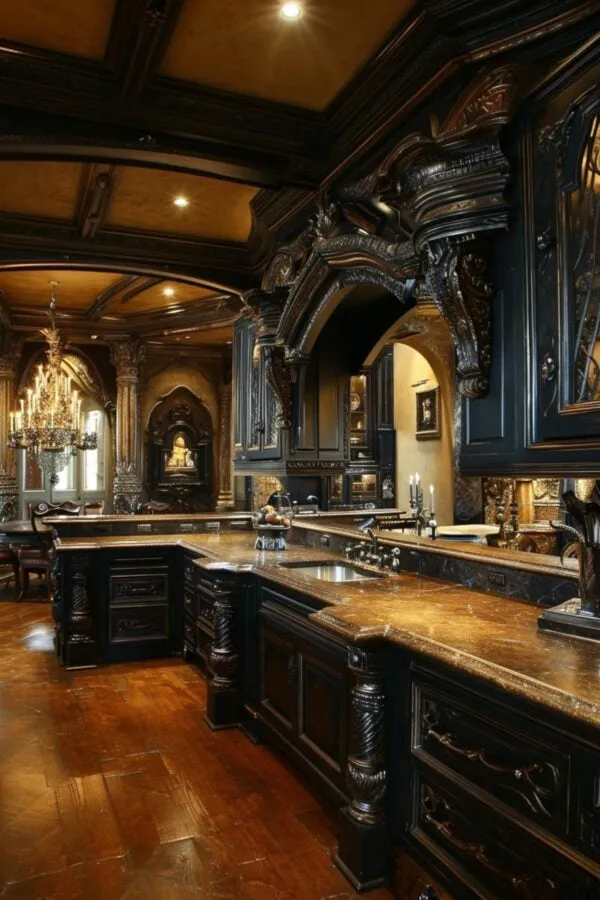
What is a Gothic Kitchen Decor 3D Model?
A Gothic Kitchen Decor 3D model is a digital representation of a kitchen space designed with Gothic architectural and decorative elements. These models are created using specialized 3D modeling software, allowing designers, architects, and homeowners to visualize their ideas before the actual construction or renovation. They offer a realistic preview of how the kitchen will look, including furniture, appliances, textures, and lighting, all within a specific Gothic aesthetic. The goal is to create a visually stunning and functional space that reflects the unique characteristics of Gothic design, such as dark colors, ornate details, and dramatic lighting.
Key Elements of Gothic Kitchen Design
Gothic kitchen design is characterized by several key elements that differentiate it from other styles. Central to this aesthetic is the use of dark and rich colors, often incorporating deep reds, blacks, purples, and forest greens. These colors create a sense of mystery and elegance. Ornate details are another crucial element, including arched doorways, intricate carvings on cabinets and furniture, and decorative hardware. The use of texture is equally important, achieved through materials like stone, dark wood, and textured wallpaper. Lighting plays a pivotal role, with dramatic chandeliers, wrought-iron fixtures, and strategically placed candles adding to the ambiance. A Gothic kitchen aims to evoke a sense of grandeur and historical significance.
Dark Color Palette in Gothic Kitchens

The cornerstone of a Gothic kitchen’s aesthetic is its dark and evocative color palette. Colors such as deep blacks, charcoal grays, and rich, saturated reds or purples are commonly used to create a sense of drama and sophistication. These colors are often applied to cabinetry, walls, and even the flooring. Contrasting these dark hues with accents of gold, silver, or other metallic finishes can add a touch of luxury and visual interest. The key is to balance the darkness with accents that prevent the space from feeling too oppressive, ensuring a stylish and inviting atmosphere. Using a 3D model can help visualize how different color combinations work in a space before making significant design choices.
Using Ornate Details and Textures
Ornate details are essential in Gothic kitchen design, contributing to the style’s characteristic richness and complexity. These details include intricate carvings on cabinet doors, crown molding with elaborate designs, and decorative hardware like iron handles and pulls. Stone countertops or backsplashes, often with textured surfaces, can add a sense of history and authenticity. Textures play a vital role in creating a tactile experience within the kitchen, with materials like dark, distressed wood, velvet fabrics, and hammered metal adding depth and visual interest. 3D models allow designers to experiment with these details, seeing how different textures and ornate elements interact and enhance the overall Gothic aesthetic.
Importance of Lighting in Gothic Kitchens
Lighting is a critical aspect of Gothic kitchen design, contributing significantly to the ambiance and overall aesthetic. Dramatic chandeliers, often made of wrought iron or featuring intricate crystal elements, are a common choice, casting a warm and inviting glow. Strategic placement of sconces and pendant lights with ornate designs can add layers of illumination and highlight key features. Candles and candelabras, while providing soft, flickering light, also add to the gothic atmosphere. In a 3D model, adjusting the lighting can dramatically alter the look and feel of the space, allowing designers to experiment with different light sources and intensities to achieve the desired effect.
Top 5 Gothic Kitchen Decor 3D Models

Here are five inspiring examples of Gothic kitchen designs that can be explored through 3D models. Each showcases unique interpretations of the style, highlighting different aspects and design choices. Using a 3D model to explore these designs can help homeowners and designers visualize the possibilities and find inspiration for their own projects, experimenting with different elements and arrangements before committing to real-world implementation.
Model 1 The Dark Elegance
This model features a deep, charcoal-colored cabinetry complemented by a black marble countertop. Intricate carvings on the cabinet doors and a wrought-iron chandelier add to the gothic flair. The space is designed with strategic lighting to highlight the rich textures and details, creating an ambiance of refined elegance. The overall feel is luxurious and sophisticated, with every element carefully chosen to enhance the dark, mysterious theme.
Model 2 Victorian Gothic
Drawing inspiration from the Victorian era, this model incorporates high ceilings, arched doorways, and elaborate detailing. The color palette includes deep burgundy and forest green. Furniture is adorned with ornate carvings. Antique-style light fixtures and a large, antique-style island complete the look. This kitchen model evokes a sense of history and grandeur.
Model 3 Modern Gothic Fusion

This design combines the classic Gothic elements with modern functionality. It features sleek black cabinetry with subtle Gothic accents like arched windows and decorative hardware. The model includes stainless steel appliances and contemporary lighting fixtures, blending the old and the new seamlessly. This model provides a practical yet stylish kitchen.
Model 4 Rustic Gothic Charm
This model incorporates a rustic aesthetic with Gothic influences. The space includes exposed brick walls, dark wood cabinetry with a distressed finish, and a stone countertop. The model emphasizes natural materials and textures, with wrought-iron accents and vintage-style lighting fixtures. This model offers a warm and inviting atmosphere.
Model 5 Contemporary Gothic
A more modern approach to Gothic design, this model features clean lines, dark color schemes, and minimalist ornamentation. The model makes use of innovative lighting, unique textures, and high-tech appliances. It showcases the adaptability of Gothic design in a sleek, modern context. The overall feel is stylish and functional, suitable for modern living.
Where to Find Gothic Kitchen 3D Models

Finding Gothic kitchen 3D models is essential for visualizing and planning your design. Several online platforms and resources provide access to a wide variety of models, ranging from free options to premium, professionally designed models. These platforms cater to various skill levels and budgets, ensuring that both novice users and experienced designers can find the models they need to bring their visions to life. Choosing the right source depends on the complexity you desire, the level of detail required, and the specific elements of Gothic design you want to incorporate.
Online 3D Model Marketplaces
Online 3D model marketplaces are the most common source for finding Gothic kitchen models. Websites like CGTrader, TurboSquid, and Sketchfab offer vast libraries of models created by professional designers. These platforms allow you to browse and purchase models, often with options to customize and adapt them to your needs. Many also have free model sections, making it possible to begin your design journey without significant upfront costs. The variety and quality of models available on these platforms cater to different levels of experience and design requirements.
Tips for Selecting the Right Model
When choosing a Gothic kitchen 3D model, consider the level of detail, the file format, and the compatibility with your software. Ensure that the model has sufficient detail for your project, including textures, materials, and realistic features. Check that the model is available in a format compatible with your 3D modeling software, such as .obj, .fbx, or .max. Furthermore, assess the model’s style and whether it aligns with your design vision. Look at the reviews and ratings from other users to gauge the model’s quality and reliability. Carefully examine the licensing terms to understand how the model can be used and modified.
Software for Viewing and Editing 3D Models

To work with Gothic kitchen 3D models, you will need appropriate software. This includes tools for viewing, editing, and rendering the models. The choice of software will depend on your skill level and the complexity of your project. There are various options, ranging from free, user-friendly programs to professional-grade software used by designers and architects. Selecting the right software is essential for effectively manipulating the 3D models and bringing your gothic kitchen designs to life. The capabilities of the software will determine the level of detail, realism, and customization achievable.
Popular 3D Modeling Software Options
There are numerous software choices available to view and edit 3D models, each with its strengths and weaknesses. For beginners, free or low-cost options like Blender and SketchUp offer accessible interfaces and extensive tutorials. These programs enable you to import, modify, and render 3D models without a steep learning curve. For more advanced users, programs such as 3ds Max, Maya, and Revit provide powerful features for complex modeling and realistic rendering. These professional-grade tools are typically used by experienced designers. Choosing the right software depends on your project’s needs, budget, and skill level. Learning these software packages will greatly enhance your ability to work with Gothic kitchen 3D models and create stunning designs.
Customizing Gothic Kitchen 3D Models
Customizing Gothic kitchen 3D models allows you to adapt them to your specific design needs. This can involve changing textures and materials, adding or removing details, and altering the overall look and feel of the model. Customization transforms generic models into bespoke designs that reflect your unique vision. It can be a creative and practical step in designing a gothic kitchen, allowing you to experiment with different elements and arrangements before committing to real-world implementation.
Changing Textures and Materials

Changing textures and materials is an essential part of customizing Gothic kitchen 3D models. This involves applying different surfaces to various elements in the design, such as cabinetry, countertops, and walls. The aim is to create a realistic and visually appealing representation of the space. Use dark, textured wood for the cabinetry, marble or granite for countertops, and wallpaper or textured paint for the walls. The software will enable you to adjust the color, pattern, and finish of these materials. Experimenting with different textures can significantly affect the overall aesthetic. By modifying textures and materials, you can achieve the specific look you desire for your Gothic kitchen.
Adding and Removing Details
Adding and removing details is another crucial aspect of customizing 3D models. This can include adding intricate carvings to cabinet doors, crown molding with elaborate designs, and decorative hardware. You can also remove details to simplify the design or to better suit your aesthetic preferences. Adding details like chandeliers, sconces, and pendant lights allows you to enhance the Gothic atmosphere. You may also adjust the arrangement of furniture and appliances. By fine-tuning the level of detail, you can tailor the model to fit the specific needs and desired style of your Gothic kitchen.
Tips for Realistic Rendering
Achieving realistic rendering in Gothic kitchen 3D models is crucial for creating a visually compelling representation of the space. This involves carefully adjusting lighting, materials, and camera settings to simulate how the kitchen will appear in the real world. Paying attention to these factors can significantly improve the visual appeal and the believability of your design. Proper rendering techniques bring your Gothic kitchen designs to life, allowing viewers to appreciate the intricate details and the overall atmosphere of the space.
Achieving a Professional Look
To achieve a professional look in your 3D renderings, focus on several key areas. Pay careful attention to lighting, using techniques like global illumination and ambient occlusion to create realistic shadows and reflections. Ensure that your materials have accurate textures and that the lighting interacts correctly with them. Use high-resolution textures and materials to avoid blurry details. Adjust camera settings to frame your scene, and choose angles that showcase your design best. Review and refine your rendering by making adjustments based on the feedback. By mastering these techniques, you can create high-quality renderings that impress clients and effectively communicate your design vision.
Conclusion Gothic Kitchen Decor 3D Model
Gothic kitchen decor 3D models offer an invaluable tool for designing and visualizing a Gothic-style kitchen. They allow designers and homeowners to explore various design elements, such as dark color palettes, ornate details, and dramatic lighting, without the cost and commitment of physical construction. They provide a practical way to experiment with different design choices and create a space that perfectly reflects the desired atmosphere. With the right resources and techniques, you can create stunning Gothic kitchen designs that combine historical elegance with modern functionality. Embracing 3D modeling empowers you to bring your Gothic kitchen vision to life, ensuring a space that is both beautiful and practical.