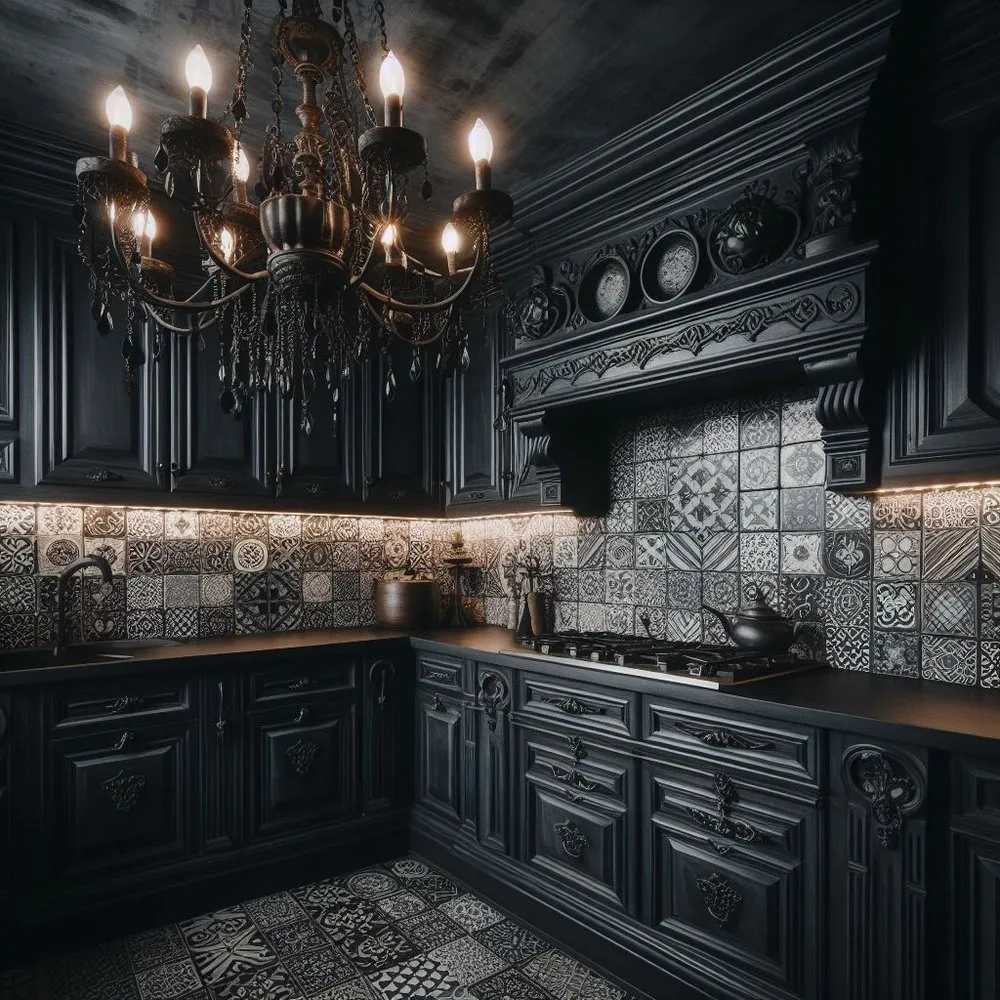
Embracing Gothic Kitchen Decor
Gothic kitchen decor offers a captivating alternative to traditional kitchen designs, embracing a sense of drama, mystery, and elegance. This style, inspired by the architecture and aesthetic of the Gothic period, can transform your kitchen into a stunning and unique space. If you’re drawn to dark colors, ornate details, and a touch of the macabre, then Gothic kitchen decor might be the perfect choice for you. With the right approach, you can create a kitchen that is both beautiful and functional, reflecting your personal style and adding a touch of historical charm to your home. This guide will explore key elements, design ideas, and tips to help you create a truly gothic-inspired kitchen.
The Allure of Gothic Design
Gothic design is known for its dramatic flair, often incorporating elements of grandeur and mystery. In a kitchen setting, this can translate into a space that feels both luxurious and inviting. The use of rich, dark colors, intricate details, and historical references can create a captivating atmosphere. This style is not just about aesthetics; it’s about creating a space that reflects personality and tells a story. Gothic kitchens often evoke a sense of history and timelessness, making them a unique and stylish choice for any home. This design choice allows for a strong focus on creating a unique and moody aesthetic, perfect for those looking to make a bold statement in their home.
Key Elements of Gothic Decor

Several key elements define Gothic kitchen decor. The first and perhaps most defining feature is the use of a dark color palette, creating a moody and atmospheric environment. Incorporating dark wood is another cornerstone, providing warmth and depth to the space. Intricate architectural details, such as arched doorways and decorative moldings, further enhance the Gothic aesthetic. Gothic-inspired furniture, particularly pieces with ornate carvings or dark finishes, is essential. Finally, accessorizing with metallic accents, candle holders, and textured fabrics completes the look, adding layers of detail and sophistication. These elements work together to create a cohesive and captivating Gothic kitchen design.
Dark Color Palette
A dark color palette is fundamental to Gothic kitchen decor. Think deep hues like black, charcoal gray, deep burgundy, or forest green. These colors create a sense of drama and sophistication, setting the stage for a truly Gothic aesthetic. Using these colors on walls, cabinetry, or even appliances can instantly transform the space. To prevent the kitchen from feeling too closed in, consider incorporating lighter accents or strategic lighting to balance the darkness. The key is to embrace the shadows while ensuring the space remains functional and inviting. The right dark palette can create a stunning contrast with other elements, enhancing the overall design.
Incorporating Dark Wood
Dark wood is a classic element in Gothic design, adding warmth and character to the kitchen. Consider using dark-stained cabinets, exposed beams, or wooden flooring to create a sense of depth. The wood’s natural grain and texture can add visual interest, complementing the darker tones in the space. Choose woods like mahogany, walnut, or ebony for a rich, luxurious feel. Dark wood also pairs well with other Gothic elements, such as ornate hardware and metallic accents, creating a cohesive and visually appealing design. Make sure your dark wood elements complement the overall dark color scheme of your kitchen.
Adding Dramatic Paint Colors

When it comes to Gothic kitchen decor, your paint choices are crucial. Consider colors like deep reds, dark blues, or even a dramatic black. These colors create the moody and atmospheric environment characteristic of this style. A well-chosen paint color can dramatically impact the space, creating a sense of depth and sophistication. Don’t be afraid to experiment with different shades to find the perfect match for your kitchen. Remember that the color should complement the other Gothic elements, like dark wood and ornate details. Experiment with color swatches in your kitchen to ensure the hues align with your vision.
Intricate Architectural Details
Intricate architectural details are a hallmark of Gothic design. Consider incorporating arched doorways and windows to add a touch of historical charm. Decorative moldings and trim can also enhance the space, providing visual interest and a sense of elegance. These details add layers to the design, creating a more immersive and visually rich experience. If you’re renovating, consider adding custom molding or even replacing existing doors and windows to reflect this aesthetic. Even small touches, such as detailed cabinet hardware, can contribute to the overall Gothic feel. Architectural details are a major element of Gothic kitchen design.
Arched doorways and windows
Arched doorways and windows are a defining feature of Gothic architecture. In a kitchen setting, these elements can add a unique and historical touch. If you’re undertaking a major renovation, consider incorporating arched elements into your design. If a full renovation isn’t possible, consider using arched mirrors or decorative panels to mimic this look. These design choices add a touch of elegance and create a visually striking space.
Decorative Moldings and Trim

Decorative moldings and trim are another key architectural detail in Gothic design. Intricate patterns and detailed carvings can add a sense of sophistication to your kitchen. Consider using crown molding, baseboards, and even decorative panels on cabinets to enhance the Gothic aesthetic. The right moldings can transform a standard kitchen into a space that feels rich and luxurious. The choice of materials and style should complement the rest of your design, ensuring a cohesive look.
Gothic-Inspired Furniture
Furniture plays a crucial role in completing the Gothic kitchen aesthetic. Opt for pieces with ornate carvings, dark finishes, and vintage-inspired designs. A large, dark, ornate dining table can serve as a striking centerpiece, while vintage-style cabinets can add character and storage. Consider antique or reproduction furniture pieces to enhance the historical feel. The furniture should complement the other Gothic elements in the kitchen, creating a cohesive and visually appealing design. Furniture selection allows for the ultimate expression of Gothic design elements.
Choosing the Right Pieces
When choosing furniture, consider pieces that reflect the Gothic style. Look for items with dark wood finishes, intricate carvings, and a sense of historical elegance. Consider pieces like a dark, ornate dining table or vintage-style cabinets. Antique or reproduction furniture can also add character and authenticity to your kitchen. The furniture should complement the other elements in your kitchen, creating a cohesive and visually appealing space. Think about the function of each piece and how it contributes to the overall Gothic design.
Dark, ornate dining tables

A dark, ornate dining table is a perfect centerpiece for a Gothic kitchen. Choose a table with intricate carvings, dark wood, and a substantial presence. This table can serve as a gathering place and a focal point for the kitchen. Consider the size of your kitchen and the number of people you want to accommodate when selecting your table. This can set the tone for the entire room. It’s one of the core pieces of furniture, and the right choice will greatly enhance your kitchen’s Gothic aesthetic.
Vintage-Style Cabinets
Vintage-style cabinets can add character and charm to your Gothic kitchen. Look for cabinets with dark finishes, ornate hardware, and a sense of history. Consider choosing cabinets with intricate details or unique designs. These cabinets can provide both storage and visual interest. Antique or reproduction cabinets can also enhance the historical feel. If you’re renovating, explore options for custom cabinetry that reflects the Gothic style. Vintage style cabinets are a must have when designing a Gothic kitchen.
Accessorizing Your Gothic Kitchen
Accessories are the final touch that can truly bring your Gothic kitchen to life. Metallic accents, such as antique brass or wrought iron, can add a touch of luxury and visual interest. Candle holders and chandeliers create a warm and inviting atmosphere, while textured fabrics and textiles add layers of depth and sophistication. Choose accessories that complement the overall Gothic aesthetic, creating a cohesive and visually appealing design. Proper accessories can bring out the best in your Gothic kitchen design.
Metallic Accents

Metallic accents can add a touch of luxury and visual interest to your Gothic kitchen. Consider using antique brass, wrought iron, or other metallic finishes in your accessories. Items like cabinet hardware, light fixtures, and decorative objects can add a sense of sophistication. Be sure to choose metals that complement your overall color scheme and design. Metallic accents can add visual interest and enhance the Gothic design.
Candle Holders and Chandeliers
Candle holders and chandeliers are perfect for creating a warm and inviting atmosphere in your Gothic kitchen. Choose pieces with intricate designs, dark finishes, and a touch of elegance. Chandeliers can serve as a focal point, while candle holders can add a sense of drama and romance. Consider using dimmable lights to create a moody ambiance. These accessories will help enhance the Gothic style.
Textured Fabrics and Textiles
Textured fabrics and textiles add layers of depth and sophistication to your Gothic kitchen. Consider using velvet, brocade, or other rich fabrics in your window treatments, cushions, and other accessories. These fabrics can add a sense of luxury and visual interest. Choose patterns and textures that complement your overall Gothic aesthetic. Adding in appropriate fabrics really bring the whole kitchen design together.
Conclusion

Creating a Gothic kitchen involves embracing a dark color palette, incorporating dark wood, adding intricate architectural details, selecting Gothic-inspired furniture, and accessorizing with metallic accents and textured fabrics. By following these ideas, you can transform your kitchen into a stunning and unique space that reflects your personal style. Remember to experiment and have fun with your design choices, and don’t be afraid to embrace the drama and mystery that define the Gothic aesthetic. With careful planning and attention to detail, you can create a kitchen that is both beautiful and functional, adding a touch of historical charm to your home. Embrace the allure of Gothic design and create a kitchen that is truly unforgettable.