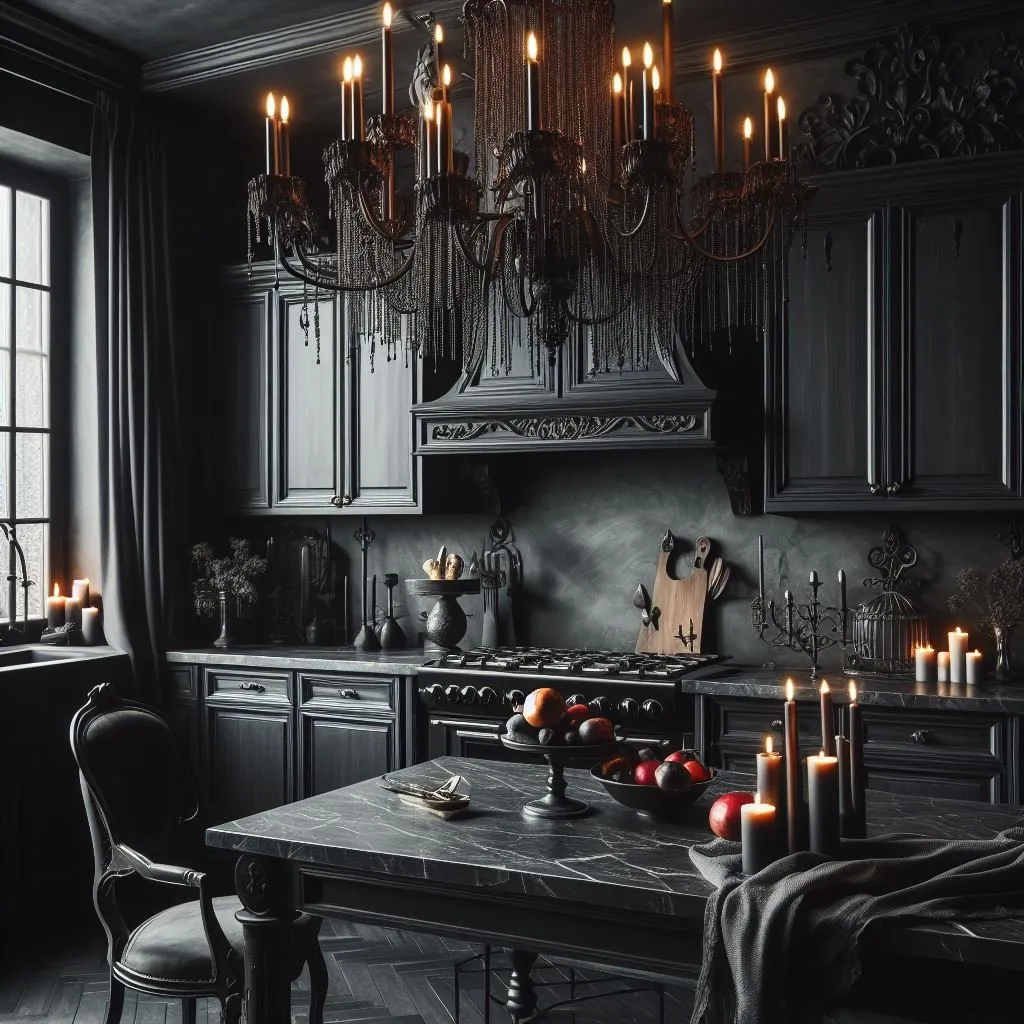
What Is Gothic Kitchen Decor?
Gothic kitchen decor is an aesthetic that embraces the dramatic, the mysterious, and the elegantly dark. It draws inspiration from the Gothic architectural style, known for its pointed arches, vaulted ceilings, and intricate ornamentation. When applied to a kitchen, this style translates into a space that is both visually stunning and imbued with a sense of history and sophistication. The goal is to create a kitchen that is far from the minimalist, bright, and airy spaces that are often favored in modern design. Instead, it’s about embracing shadows, rich textures, and a touch of the macabre to craft a truly unique and unforgettable environment. This style allows for a highly personalized space, reflecting a love for history, art, and the unconventional.
The History & Essence of Gothic Design
Gothic design originated in Europe during the medieval period, roughly from the mid-12th century to the 16th century. Initially, it was primarily associated with religious architecture, with the construction of grand cathedrals and churches characterized by soaring heights, pointed arches, ribbed vaults, and stained-glass windows. These architectural elements served not only functional purposes but also aimed to inspire awe and reverence. Over time, Gothic influence spread to other art forms, including sculpture, painting, and decorative arts, influencing the way people lived and the spaces they inhabited. The essence of Gothic design lies in its ability to evoke a sense of mystery, grandeur, and spiritual depth. It’s about the interplay of light and shadow, the use of intricate details, and the embrace of a somewhat dramatic atmosphere.
Key Elements of Gothic Decor

Several key elements define the Gothic style. These elements work together to create a cohesive and visually compelling aesthetic. Understanding these elements is crucial for successfully incorporating Gothic decor into your kitchen. By focusing on a few key design choices, you can completely transform your space. This will help you create the mysterious and elegant atmosphere that is Gothic kitchen decor.
Dark Color Palette
A dark color palette is fundamental to Gothic kitchen decor. Think deep, rich hues like black, charcoal gray, burgundy, forest green, and navy blue. These colors create a sense of drama and intimacy, setting the stage for the other design elements. You can use these dark colors on your walls, cabinetry, and even your appliances. However, it is important to balance these dark colors with lighter accents to prevent the space from feeling too oppressive. This can be achieved through the use of metallic finishes, lighter-colored countertops, or strategically placed light fixtures. The goal is to create a sense of depth and contrast within the space.
Textured Materials
Texture plays a crucial role in Gothic kitchen decor, adding visual interest and tactile richness. Consider incorporating materials like exposed brick, stone, velvet, and wrought iron. These materials not only add depth but also reflect the historical roots of the Gothic style. For example, exposed brick can create a raw and industrial feel, while stone countertops can provide a sense of permanence and solidity. Velvet upholstery on bar stools or chairs can add a touch of luxury and softness, contrasting with the harder materials. Wrought iron details on light fixtures, cabinet hardware, or decorative elements further enhance the Gothic aesthetic. The use of textured materials is key to creating an inviting and visually appealing space.
Ornate Details

Gothic design is known for its intricate ornamentation. Embrace decorative elements such as detailed carvings, ornate hardware, and elaborate moldings. These details add a layer of sophistication and create a sense of historical depth. Consider incorporating decorative cabinet pulls and knobs, or adding crown molding to your cabinets and ceilings. You can also look for furniture with carved legs or decorative backsplashes with intricate patterns. These small details, when combined, can make a big impact on the overall aesthetic of your kitchen. These additions can elevate the space from a functional room to a work of art.
How to Incorporate Gothic Kitchen Decor
Transforming your kitchen into a Gothic-inspired space doesn’t have to be an all-or-nothing endeavor. There are many ways to incorporate elements of the style, depending on your budget, preferences, and existing kitchen layout. Whether you are planning a complete renovation or looking for a few simple updates, there are numerous possibilities for infusing Gothic charm into your kitchen. By carefully selecting the elements that resonate with you most, you can create a kitchen that reflects your personal style and transforms your space into a haven of dark elegance.
Choosing Your Style
Consider what aspects of Gothic design you find most appealing. Do you prefer the dramatic and mysterious aesthetic of a classic Gothic cathedral, or a more modern take on the style? Your personal taste should guide your choices. Research different sub-styles, such as Victorian Gothic or Modern Gothic, to help refine your vision. This will help you narrow your focus and make cohesive design choices. Deciding which elements resonate most will help you integrate them into your kitchen in a way that feels authentic and personal.
Furniture Selection

When selecting furniture, look for pieces that reflect the key elements of Gothic design. Consider dark-stained wood furniture, such as a kitchen island or dining table, to provide a grounding element in the space. Choose chairs with ornate details, high backs, or velvet upholstery. If space allows, add a buffet or hutch with carved details to display your favorite dishware or decorative items. The furniture you select should not only be functional, but also contribute to the overall ambiance of the space. Look for pieces with strong lines and an air of sophistication.
Adding Accessories
Accessories are a great way to infuse Gothic charm into your kitchen without a major renovation. Incorporate items like wrought iron candle holders, antique mirrors, and decorative plates. Consider adding a dramatic chandelier or pendant lights with ornate detailing. Display dark-colored dishware, such as black or deep red plates and cups. Don’t be afraid to add artwork that complements the style, such as gothic-inspired prints or paintings. The right accessories can dramatically change the aesthetic of a space. Small touches can create a cohesive atmosphere.
Lighting
Lighting plays a crucial role in setting the mood. Choose light fixtures that complement the Gothic aesthetic. A dramatic chandelier can serve as a focal point, while sconces can provide ambient lighting. Consider using Edison bulbs to add a touch of vintage charm. Make sure to use a dimmer switch, so you can control the light levels. This will allow you to create an inviting and atmospheric space, perfect for both cooking and entertaining. The goal is to create layers of light. This can highlight the decorative elements and add depth.
Creating Ambiance

Ambiance is created through the careful selection of elements. Candles, incense, or a diffuser with a Gothic-inspired scent can enhance the atmosphere. The overall goal is to create a space that feels intriguing and visually stunning. The right ambiance will allow you to relax and truly appreciate the beauty of your Gothic kitchen. These touches will transform your kitchen into a space that evokes a feeling of timeless elegance and mystery.
Gothic Kitchen Decor Design Ideas
Let’s explore a few design ideas to inspire your own Gothic kitchen transformation. The beauty of this style is that it is incredibly versatile. It can be adapted to suit a variety of tastes and preferences. From a minimalist approach with a few key Gothic elements to a fully immersive experience, you can customize your space. These ideas will offer a starting point to help you visualize your perfect kitchen.
Dark & Moody
Embrace a dark and moody atmosphere with deep charcoal gray or black cabinetry, paired with a contrasting light countertop. Add a black chandelier and wrought iron accents. Use dark-colored appliances and accessories. Consider incorporating exposed brick walls or a textured backsplash to add visual interest. The goal is to create a space that is both elegant and mysterious. The dark color palette can be balanced with metallic finishes for the hardware or lighting to create depth.
Victorian Elegance

Incorporate Victorian-era elements, such as ornate cabinet hardware, a farmhouse sink, and detailed moldings. Choose a color palette of deep reds, greens, and golds. Add a vintage-style chandelier and antique accessories. Consider using patterned wallpaper or a decorative backsplash. The goal is to create a space that reflects the opulence and elegance of the Victorian era. This design style will make your kitchen feel luxurious and inviting.
Modern Gothic Fusion
Combine modern elements with Gothic influences. Use sleek, black cabinetry, paired with a dark countertop. Incorporate wrought iron accents in the lighting and hardware. Add a touch of Gothic design with decorative accessories. The goal is to create a space that feels both contemporary and historical. Choose a modern style with clean lines and simple details, but add Gothic touches with dark colors and textures. This fusion creates a unique and sophisticated kitchen.
Where to Find Gothic Kitchen Decor
Finding the right decor is crucial to achieving the Gothic aesthetic. There are many places to find the perfect pieces to transform your kitchen. From specialty stores to online retailers, the options are vast. Consider the style and budget you are working with to determine the best places to find your kitchen decor. The right selection of furnishings, accessories, and lighting will help you create the ideal Gothic kitchen.
Online Retailers

Online retailers offer a wide selection of Gothic-inspired decor. Websites like Wayfair, Etsy, and Amazon often have a variety of items to choose from. You can easily compare prices and styles to find pieces that fit your budget and preferences. Many online retailers also offer customer reviews and photos, which can help you assess the quality and appearance of items. You can find everything from furniture to accessories, making it easy to create a cohesive look for your kitchen.
Antique Shops & Flea Markets
Antique shops and flea markets are excellent sources for unique, vintage Gothic pieces. You can find antique mirrors, chandeliers, and other decorative items that add character to your kitchen. Visiting these locations can also be a fun experience. It allows you to discover one-of-a-kind items. Keep in mind that the items are often pre-owned. It is important to inspect them carefully. You can find hidden treasures that reflect your personal style. These can add authentic charm to your Gothic kitchen.
Specialty Stores
Specialty stores that focus on gothic or vintage decor can be an invaluable resource. These stores often have curated selections of unique and high-quality items. You can find specialty lighting, furniture, and accessories that are perfect for your Gothic kitchen. The staff at these stores often have in-depth knowledge of the Gothic style. They can offer valuable advice and help you find the perfect pieces to complete your design. They may also be able to help you locate custom items.
Maintaining Your Gothic Kitchen
Once you have transformed your kitchen into a Gothic haven, it is important to maintain its beauty and elegance. Proper care and attention will ensure your kitchen remains a stunning and inviting space for years to come. This includes everything from cleaning and maintenance to updating the space. Careful upkeep ensures that your Gothic kitchen remains an inspiring and captivating space.
Cleaning & Care
Regular cleaning is essential to maintain the appearance of your Gothic kitchen. Use appropriate cleaning products for the materials in your kitchen. Avoid harsh chemicals that can damage surfaces. Dust frequently and clean spills promptly. Take extra care when cleaning ornate details or delicate surfaces. By establishing a regular cleaning routine, you can keep your kitchen looking its best. The goal is to maintain the dark elegance and prevent any buildup.
Seasonal Updates
Consider updating your decor seasonally to keep your kitchen feeling fresh and exciting. Add seasonal accessories such as themed candles or textiles. Change your artwork or display different items on open shelves. You can also incorporate seasonal flowers or greenery to add a touch of nature. These small changes can have a big impact and ensure that your kitchen remains a captivating space throughout the year. The goal is to maintain a dynamic aesthetic that reflects the changing seasons.
Frequently Asked Questions
Here are some frequently asked questions regarding Gothic kitchen decor:
What are the essential colors for Gothic kitchen decor? The essential colors include black, charcoal gray, burgundy, forest green, and navy blue.
What materials are best for Gothic kitchen decor? Textured materials like exposed brick, stone, velvet, and wrought iron work best.
Where can I find Gothic kitchen decor? You can find Gothic kitchen decor at online retailers, antique shops, flea markets, and specialty stores.
How do I balance the dark color palette? Balance the dark color palette with metallic finishes, lighter-colored countertops, and strategic lighting.
Can I incorporate Gothic decor into a small kitchen? Yes, you can incorporate Gothic decor into a small kitchen by using dark accents and focusing on a few key elements.