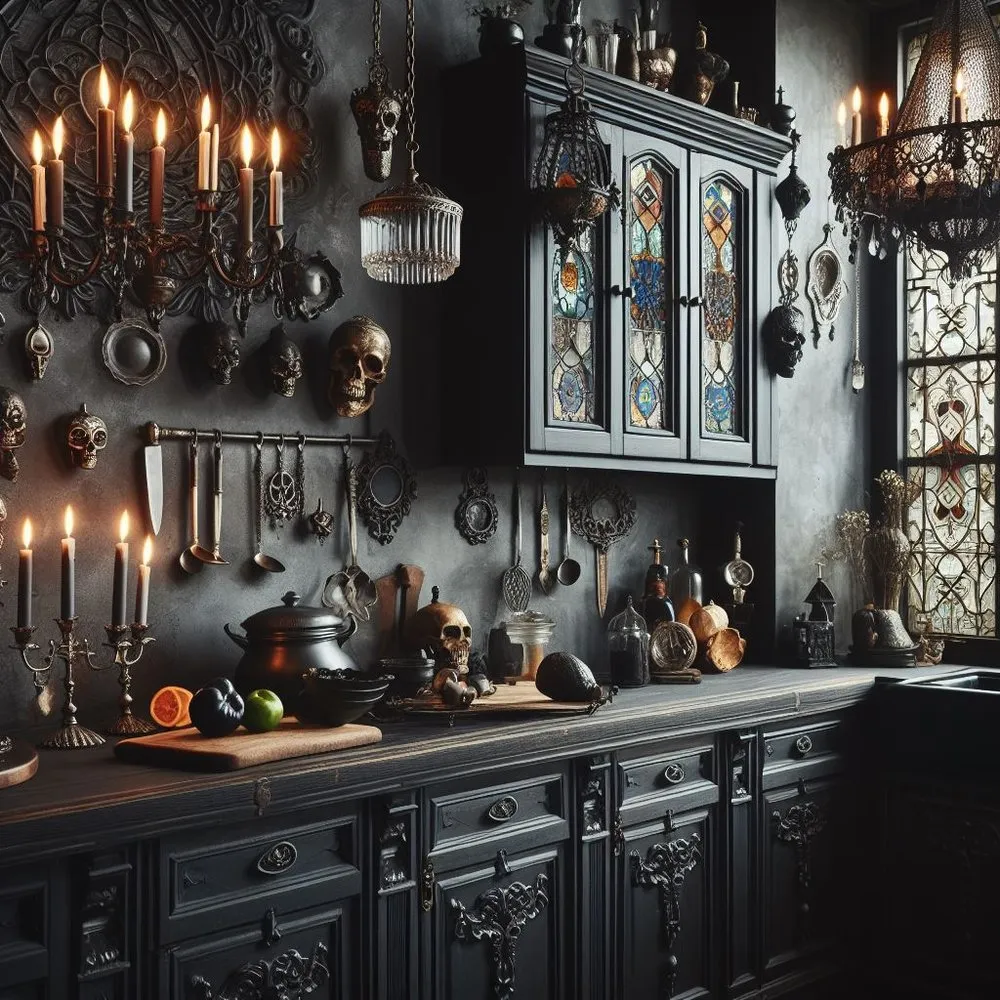
Embracing the Gothic Kitchen Decor Aesthetic
The gothic kitchen decor aesthetic is more than just a trend; it’s a statement of individuality and a celebration of dramatic elegance. This style, rooted in the architectural grandeur of the Gothic era, offers a unique opportunity to transform your kitchen into a space that is both inviting and mysterious. It’s about creating a sanctuary where dark hues, intricate details, and a touch of the macabre come together to form a truly unforgettable culinary experience. The goal is to blend functionality with a strong visual narrative, making your kitchen a conversation starter and a reflection of your personal style. Whether you’re drawn to the historical richness or the modern interpretations of the style, incorporating gothic elements can breathe new life into your home, creating a space that is both beautiful and uniquely you.
The Origins of Gothic Design
To truly appreciate gothic kitchen decor, it’s important to understand its roots. Gothic design emerged in the mid-12th century in Europe, flourishing primarily in architecture, but its principles quickly extended to interior design and the decorative arts. The Gothic period was characterized by grand cathedrals, soaring arches, pointed vaults, and elaborate stained-glass windows. These architectural elements inspired a style that emphasized verticality, intricate detailing, and a sense of awe. The movement moved away from the heavy, rounded arches of the Romanesque period, embracing lightness and reaching for the heavens. This architectural revolution significantly influenced furniture, lighting, and decorative items of the time, laying the groundwork for the gothic style we know today, and the inspirations for a gothic kitchen.
Key Characteristics of Gothic Style

Several key characteristics define the gothic style. Verticality is paramount, with tall, slender elements that draw the eye upward. Intricate detailing is another hallmark, featuring elaborate carvings, pointed arches, and geometric patterns. Dark, rich colors like deep reds, purples, and blacks are prevalent, often contrasted with metallic accents such as gold or silver. A sense of mystery and drama is crucial, often achieved through the use of shadows, dramatic lighting, and opulent materials. Gothic design often incorporates natural elements, such as stone and wood, to create a sense of connection to the earth, but with a touch of the otherworldly. These elements, when carefully curated and implemented, can create a kitchen that is both breathtaking and uniquely Gothic.
Incorporating Gothic Elements into Your Kitchen
Transforming your kitchen into a gothic haven involves careful consideration of various elements, from color palettes and materials to furniture and accessories. The key is to strike a balance between the dramatic and the functional, ensuring that your kitchen remains a practical space while embracing the aesthetic. Consider how the use of dark colors can create a sense of intimacy and sophistication, and how the inclusion of ornate details can add character and depth. Think about the interplay of light and shadow, and how it can enhance the gothic ambiance. It’s important to avoid overwhelming the space; instead, aim for a cohesive design that reflects the spirit of the era. By integrating these elements thoughtfully, you can craft a kitchen that is both stylish and supremely functional.
Dark Color Palettes and Dramatic Accents
The cornerstone of gothic kitchen decor is the color palette, which leans heavily towards dark and moody hues. Deep blacks, charcoal grays, and rich, saturated colors like burgundy, emerald green, and deep blues create a sense of drama and sophistication. These colors provide a perfect backdrop for metallic accents, such as gold, silver, or bronze, which add a touch of luxury. The key is to use these colors strategically to create depth and visual interest. Dark cabinets can be paired with lighter countertops to prevent the space from feeling too enclosed, and metallic hardware can be used to add a touch of glamour. These dark and dramatic accents create a gothic atmosphere and a kitchen with a strong personality.
Choosing the Right Color Palette for Your Gothic Kitchen

Selecting the right color palette is critical for establishing the gothic aesthetic in your kitchen. Start with a base of dark colors like black, deep gray, or even a very dark navy. Consider these colors for cabinetry, walls, or even the island. To add visual interest and prevent the space from feeling too heavy, introduce contrasting colors. Metallic accents, like gold or silver, can be incorporated through hardware, lighting fixtures, or decorative elements. You can also consider using a deep, jewel-toned color, such as burgundy or emerald green, as an accent color on a feature wall or in the backsplash. Always take into account the amount of natural light in your kitchen, as darker colors can make a space feel smaller. With careful planning, the right color choices can create the perfect Gothic kitchen ambiance.
Using Dark Wood and Stone
Dark wood and stone are essential materials in creating an authentic gothic kitchen. Dark-stained cabinetry, particularly those with intricate carvings or paneling, evokes the architectural features of the Gothic era. Consider using wood varieties like mahogany, walnut, or cherry for their rich colors and grain patterns. Stone countertops, such as granite or marble, add a natural, organic element and provide a beautiful contrast to the dark wood. Dark-colored stone floors or backsplashes further enhance the gothic atmosphere. The combination of these materials brings a sense of solidity, history, and timeless elegance to your kitchen, perfectly embodying the gothic spirit.
Adding Dramatic Accents
Dramatic accents are the finishing touches that bring the gothic theme to life. Incorporate metallic hardware on cabinets and drawers, such as ornate pulls and knobs. Use wrought iron or dark-metal lighting fixtures with dramatic shapes and detailing. Statement backsplashes, like those made from dark tiles or patterned stone, can add visual interest and a touch of luxury. Consider adding gothic-inspired artwork, such as portraits or landscapes, to the walls. These accents create a space that truly represents the gothic period, and creates an interesting place to be.
Gothic Kitchen Decor Elements

Several key elements contribute to the overall gothic aesthetic. Intricate details, such as ornate cabinetry and hardware, are essential. Dramatic lighting fixtures, including chandeliers and sconces, play a vital role. Statement backsplashes and gothic-inspired furniture pieces complete the look. By carefully selecting these elements, you can create a cohesive and visually stunning space that embodies the essence of gothic design. Every component in your kitchen should contribute to the overarching theme and reflect your style, making it an authentic representation of the gothic era. The selection of decor elements is key to create the right atmosphere.
Intricate Cabinetry and Hardware
Cabinetry is a focal point in any kitchen, and in a gothic kitchen, it takes center stage. Opt for dark-stained wood cabinets, such as those made from mahogany or walnut, that are either flat-panel or have raised panels with intricate carvings or moldings. Consider incorporating arched doors or decorative corbels to enhance the gothic feel. The hardware, such as pulls and knobs, should be equally detailed. Choose wrought iron or dark-metal hardware with ornate designs. The goal is to add a sense of history and sophistication to the space, making it a true representation of the gothic style. The right details can transform your kitchen into something special.
Ornate Lighting Fixtures
Lighting plays a crucial role in creating the gothic ambiance. Chandeliers with elaborate details, such as candelabra-style lights or those with dark metal finishes, are perfect choices. Sconces with dark metal or wrought iron accents can add a touch of elegance to the walls. Consider incorporating dimmers to control the intensity of the light and create a dramatic atmosphere. When choosing lighting, make sure that the fixtures complement the overall design and provide adequate illumination. Lighting design must create the right amount of drama.
Statement Backsplashes

A statement backsplash can be a defining feature in your gothic kitchen. Dark tiles with intricate patterns, such as those inspired by Gothic architecture, add a touch of luxury and visual interest. Consider using stone backsplashes, like granite or marble, for a touch of natural elegance. The choice of the backsplash should complement the cabinetry and overall design scheme. The backsplash is key, and must be of the same style as the overall decor to avoid design issues. The goal is to create a visually striking space that reflects the character of the gothic style.
Decorating Your Gothic Kitchen
Decorating your gothic kitchen involves selecting the right furniture, incorporating appropriate accessories, and ensuring a cohesive look. Your choices will enhance the gothic style, create a space that is inviting and visually captivating. Consider the interplay of colors, textures, and patterns to create a harmonious design that truly reflects your personal style. The correct furniture and accessories can transform the kitchen into something special.
Selecting Gothic-Inspired Furniture
Choose furniture that complements the gothic aesthetic. A large, dark wood dining table with ornate detailing can be a focal point in the kitchen. Consider adding chairs with high backs and dark upholstery. A kitchen island with intricate carvings or a dark finish can add to the gothic feel. The furniture should be functional and beautiful, adding to the gothic aesthetic. The furniture must be strong and long lasting, so it can create the perfect gothic atmosphere for years to come.
Accessorizing with Gothic Decor

Accessories add the finishing touches. Add gothic-inspired artwork, such as portraits or landscapes in dark frames, to the walls. Display antique kitchenware, such as pewter or iron pots and pans, to add a touch of history. Consider incorporating candlesticks, candelabras, or decorative lanterns to enhance the gothic ambiance. These accessories should add character and enhance the overall design. Accessorizing is an art, so remember that.
Creating a Cohesive Look
The key to a successful gothic kitchen is creating a cohesive look. Ensure that all elements, from the color palette to the furniture, complement each other. The use of a common design language, such as intricate details or dark finishes, will tie everything together. Make sure the accessories and decor reflect the gothic theme. Consider the interplay of light and shadow, as this is a fundamental part of the gothic aesthetic. The goal is to create a space that is both inviting and visually stunning, reflecting the spirit of the gothic era. Cohesive designs are better.
Gothic Kitchen Decor Ideas for Different Spaces
The gothic style can be adapted to different kitchen sizes and layouts. Whether you have a small, cozy kitchen or a large, open space, there are ways to incorporate the gothic aesthetic. The key is to adjust the elements to fit the space, ensuring that the design is harmonious and functional. Different layouts need to be approached with their own set of ideas. The following ideas will provide some guidance.
Small Gothic Kitchens

In a small kitchen, it’s important to be strategic with the design. Opt for dark colors on the lower cabinets, and use lighter colors on the upper cabinets or walls to create a sense of space. Incorporate metallic accents, such as gold or silver, to add a touch of glamour and reflect light. Choose compact furniture pieces with gothic-inspired detailing. Using mirrors can also create the illusion of more space. The goal is to create a functional and stylish kitchen without overwhelming the space. Small spaces are easier to manage.
Large Gothic Kitchens
Large kitchens offer more flexibility. You can go bold with dark colors throughout the space. Consider adding a large kitchen island with intricate carvings or a dark finish. Use ornate lighting fixtures, such as chandeliers, to create a dramatic effect. Incorporate gothic-inspired furniture, such as a dining table with high-backed chairs. A large kitchen gives you the freedom to experiment with different elements and create a truly stunning gothic space. Large spaces can create greater opportunities.
Modern Gothic Kitchens
Modern gothic kitchens blend gothic elements with contemporary design. Incorporate dark color palettes and metallic accents while keeping the overall design streamlined. Choose modern cabinetry with gothic-inspired hardware. Use a statement backsplash with a gothic pattern to add visual interest. Select furniture with clean lines and gothic detailing. The goal is to create a sophisticated space that reflects the style of the gothic era and the modern era. This combination produces excellent results.
Maintaining Your Gothic Kitchen

Proper maintenance is crucial to preserve the beauty of your gothic kitchen. Regular cleaning and care will keep the materials in good condition. It will also ensure that your kitchen continues to look its best for years to come. Keeping your gothic kitchen clean is key to make it a great place to spend time in.
Cleaning and Care
Regular cleaning is essential for maintaining the gothic aesthetic. Wipe down surfaces regularly to remove dust and grime. Use appropriate cleaning products for the materials used in your kitchen. For example, use wood cleaner for wooden cabinets and mild detergent for stone countertops. Avoid abrasive cleaners or harsh chemicals, as they can damage the finishes. It’s important to take care of the materials. This is key for a long-lasting gothic kitchen.
Preserving the Gothic Style
To preserve the gothic style, consider performing routine maintenance. Regularly inspect the cabinets and hardware, and make any necessary repairs. Protect the furniture from direct sunlight and extreme temperatures to prevent damage. Avoid placing heavy objects on delicate surfaces, such as the countertops. By following these maintenance tips, you can enjoy your gothic kitchen for many years. Maintaining your kitchen is key for long term enjoyment.