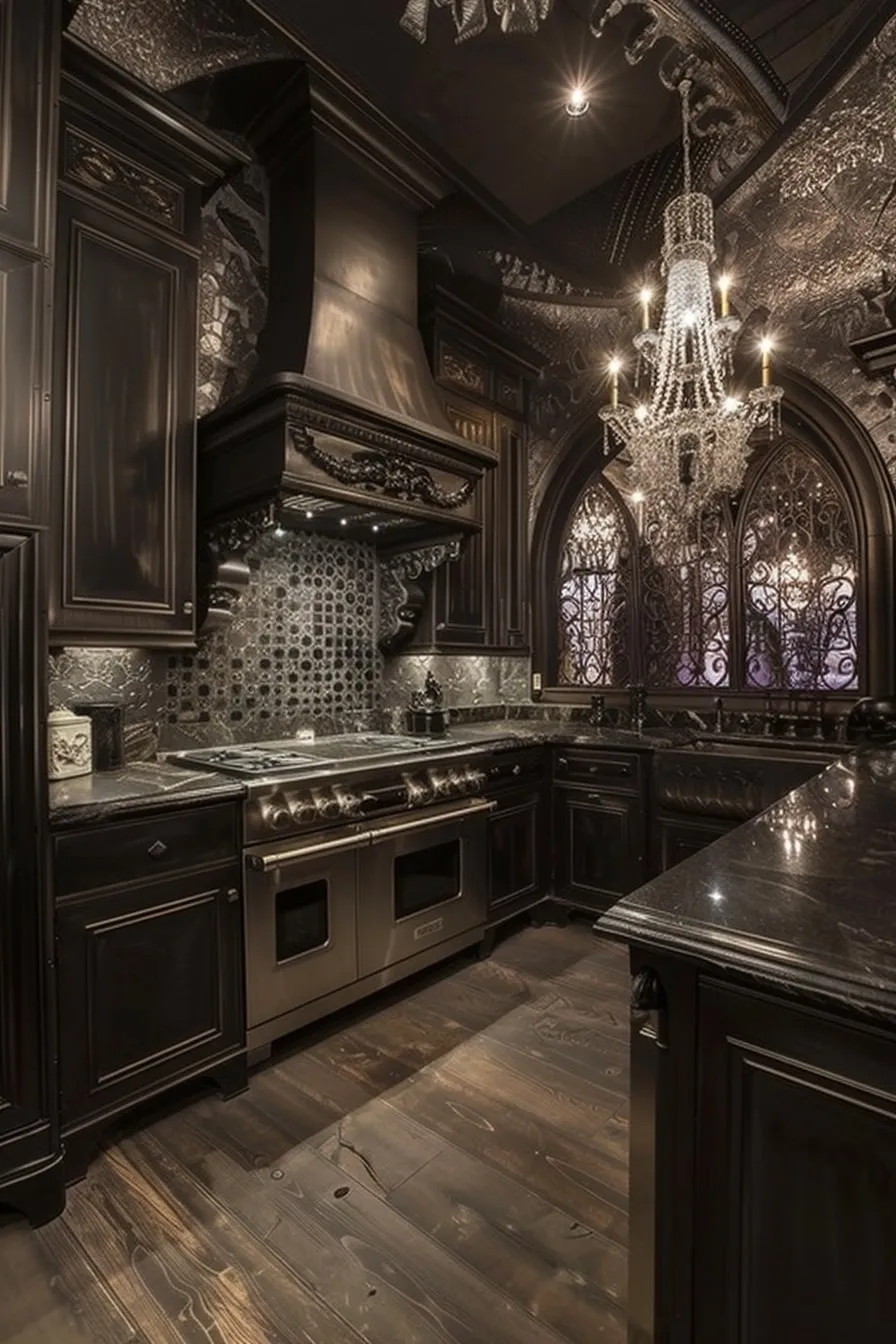
Gothic Kitchen Decor Top 7 Ideas
Transforming your kitchen into a gothic sanctuary is an exciting endeavor, allowing you to blend dark aesthetics with functional design. Gothic decor, characterized by its dramatic flair, intricate details, and moody color palettes, can create a unique and captivating space. This guide provides seven inspiring ideas to help you infuse your kitchen with gothic charm, ensuring a space that is both elegant and evocative. From selecting the right color schemes to incorporating ornate details and lighting, each suggestion is designed to bring a touch of gothic grandeur to your home. Get ready to explore how you can create a kitchen that is as enchanting as it is practical, reflecting your unique style and appreciation for the gothic aesthetic. Whether you’re looking for subtle accents or a complete overhaul, these ideas will help you on your journey to a stunning gothic kitchen.
Embrace the Darkness Decor
At the heart of gothic kitchen design lies a commitment to a dark and mysterious ambiance. This doesn’t necessarily mean your kitchen must be perpetually gloomy, but rather that you embrace the richness and depth of darker color palettes. Consider incorporating elements like black cabinets, deep charcoal walls, or even dark, textured wallpaper. These darker tones create a dramatic backdrop that highlights the intricate details and ornamentation characteristic of gothic design. By thoughtfully balancing these darker elements with lighter accents, you can avoid a space that feels too heavy, creating a sense of intrigue and sophistication. The goal is to curate a space that feels both inviting and a little bit mysterious, perfectly encapsulating the gothic spirit.
Dark and Moody Color Palette

Choosing the right color palette is fundamental to setting the mood in your gothic kitchen. Focus on colors like deep blacks, charcoal grays, and rich, dark blues and greens. These colors provide a sophisticated foundation for the gothic aesthetic. Accent these darker shades with touches of gold, silver, or even deep reds and purples to add warmth and contrast. Remember, the key is to balance the darkness with strategically placed lighter elements. Consider a lighter countertop or backsplash to prevent the space from feeling too enclosed. The skillful use of color creates a cohesive and inviting gothic kitchen, where every shade contributes to the overall dramatic effect. The image gothic-kitchen-color-palette.webp would perfectly complement the dark aesthetics.
Incorporate Black and Deep Hues
Black is a cornerstone of gothic design, representing elegance and sophistication. Integrate black in your cabinetry, countertops, or even appliances to create a strong, visual statement. Complement black with deep hues like burgundy, emerald green, or navy blue to add layers of depth and interest. These darker colors not only embody the gothic aesthetic but also create a sense of intimacy and warmth. Consider using these hues on walls or as accent pieces, like a statement backsplash or decorative items. Ensure good lighting to prevent the space from feeling overly dark. Using a mix of black and deep colors will help transform your kitchen into a gothic masterpiece.
Introduce Gothic Ornament Kitchens
Gothic kitchens are defined by ornate details and intricate craftsmanship. This involves incorporating elements that reflect the architecture and design prevalent during the Gothic period. The goal is to create a kitchen space that is both visually stunning and true to the gothic style. These elements should be carefully selected to contribute to the overall ambiance, allowing you to create a kitchen that feels both luxurious and evocative of the gothic era. Think of incorporating ornate details to showcase the unique style that defines the gothic aesthetic. Using gothic-kitchen-ornament.webp image will help with your understanding on this idea.
Ornate Cabinetry and Hardware

Choose cabinetry with intricate detailing, such as raised panels, arched doors, or even custom carvings. These details add a touch of elegance and sophistication, which are central to the gothic style. Pair your cabinets with ornate hardware, such as antique-style pulls and knobs in bronze, pewter, or iron. These details elevate the look and contribute to the overall gothic atmosphere. The cabinet’s style should be classic and timeless, to reflect the architectural style of gothic designs. Ensure that the materials are of high quality, as well as the design is well-executed, ensuring your cabinets are a focal point in your gothic kitchen. Using gothic-kitchen-cabinetry.webp image will help with understanding the cabinets.
Intricate Detailing and Carvings
Look for opportunities to include intricate detailing and carvings throughout your kitchen. This might include decorative molding on the walls or ceiling, carved panels on the island, or even decorative corbels under the countertops. These intricate elements add depth and texture, enhancing the visual appeal of the kitchen. When it comes to carvings, consider including gothic motifs, such as gargoyles or stylized foliage, to capture the essence of the gothic aesthetic. Use these details judiciously to add a touch of mystery and sophistication to the overall design. Remember, it’s the details that make a gothic kitchen truly unique and memorable. Adding an image like gothic-kitchen-hardware.webp will help with understanding the details.
Antique or Vintage Hardware
Antique or vintage hardware is a critical element for creating an authentic gothic kitchen. Search for cabinet pulls, knobs, and other hardware in antique stores, flea markets, or online. Look for pieces made from materials such as cast iron, bronze, or pewter, which are characteristic of the gothic period. The use of antique hardware can add a touch of historical significance and elegance to your kitchen. Ensure that the hardware is not only aesthetically pleasing but also functional. These antique or vintage pieces will create a dramatic and impressive gothic-style kitchen. Select antique knobs and pulls to ensure the authenticity of the style. It’s an essential aspect of gothic design, the antique is a must. The image gothic-kitchen-hardware.webp could be used to show antique hardware.
Gothic Kitchen Decor with Stone and Metal

Stone and metal are essential elements in gothic design. These materials contribute to the aesthetic of this design style, providing a sense of durability and timeless elegance. Stone and metal are used to create a space that is both luxurious and reflective of gothic architecture. Selecting stone and metal will reflect the architectural style prevalent during the Gothic period, allowing you to create a space that is both visually stunning and functional. Consider incorporating stone countertops and metal accents to enhance the gothic elements, infusing the space with an air of mystery and grandeur. The use of stone and metal will add depth and texture, and bring the gothic era to your kitchen.
Stone Countertops
Stone countertops are a central feature in a gothic kitchen. Choose natural stones like granite or marble in dark shades to complement the overall aesthetic. These materials provide a touch of luxury and enhance the gothic feel of the space. Select countertops with intricate veining or patterns to add visual interest and depth. Ensure that the countertops are sealed properly to protect them from stains and scratches. The stone should have a smooth and polished surface to showcase the beautiful pattern and rich colors. A kitchen with stone countertops is always a symbol of luxury and gothic style, it adds a strong gothic character to the space. Ensure that the chosen stone complements the overall color palette and design scheme of your kitchen.
Metal Accents
Metal accents are essential in gothic kitchen design, adding texture and depth to the space. Incorporate metal through cabinet hardware, lighting fixtures, and decorative accents. Consider using metals such as iron, bronze, or pewter, which are consistent with the gothic style. These metals provide contrast to the darker colors and add an element of sophistication to the space. Metal accents can be used in various ways, from intricate drawer pulls to statement lighting. Choose metal finishes that complement your existing decor and enhance the gothic atmosphere of your kitchen. These elements make a striking visual statement, and they will improve the overall aesthetic of the space, elevating your gothic kitchen’s appeal.
Add Gothic Lighting

Lighting plays a crucial role in setting the mood of a gothic kitchen, infusing the space with the characteristic drama and mystery. Select lighting fixtures that not only illuminate your kitchen but also enhance the gothic aesthetic. Consider options like chandeliers, statement lighting, candlelight, and lanterns, each designed to evoke a sense of historical elegance. The proper lighting helps in the functionality and aesthetic of your gothic kitchen. Good lighting is a must to provide visibility and mood. The lighting needs to fit the gothic style, as it’s a key element in this type of kitchen.
Chandeliers and Statement Lighting
Chandeliers are a classic element in gothic design, adding a touch of grandeur and sophistication to your kitchen. Choose a chandelier with intricate details, such as wrought iron or crystal embellishments. Install the chandelier above the kitchen island or dining area to create a focal point. Use statement lighting, such as pendant lights or sconces, to enhance the gothic theme. Select fixtures with ornate designs and dark finishes. Chandeliers and statement lighting can create dramatic effects, improving the overall aesthetics and functionality of your kitchen. Select lights that blend well with the overall theme. The use of the gothic-kitchen-lighting.webp image will help you understand the lightning.
Candlelight and Lanterns
Candlelight and lanterns are integral elements in establishing a gothic ambiance. Place candles of various sizes and heights throughout the kitchen, particularly on countertops, shelves, or dining tables. Use lanterns with a dark, gothic appearance as decorative accents, possibly including wrought iron or metal. Consider incorporating candelabras or candle holders with intricate designs to complement the aesthetic. This creates a warm and inviting environment that enhances the overall gothic atmosphere. Candlelight and lanterns add a touch of romance and mystery to your kitchen. It is a must-have for creating a gothic kitchen design. The image of gothic-kitchen-lighting.webp will enhance your understanding on it.
Gothic-Inspired Accessories

Accessories are essential for adding the finishing touches to your gothic kitchen, allowing you to personalize your space and create a cohesive look. Select accessories that reflect the gothic theme, such as religious symbolism, elegant decor, and a touch of mystery and sophistication. These carefully chosen accessories will complete the gothic transformation and bring the unique style to your kitchen. Incorporating gothic-inspired accessories will help you create a space that is both visually appealing and true to the gothic aesthetic. Select accessories with gothic motifs to make the space stand out. Using gothic-kitchen-accessories.webp image will help with understanding the idea.
Religious Symbolism and Art
Religious symbolism often features in gothic design, adding historical and cultural depth to your kitchen. Incorporate art pieces with religious themes, such as crosses or depictions of saints. Display these items on walls, shelves, or countertops to create visual interest and thematic continuity. Consider incorporating religious statues or other gothic art pieces. This will also create a sense of drama, bringing the gothic aesthetic into your kitchen. Select art pieces that are consistent with the gothic theme, ensuring they add to the overall aesthetic. Use an image like gothic-kitchen-accessories.webp for a better understanding.
Elegant Gothic Decor
Elegant decor is key to enhancing the gothic aesthetic in your kitchen. Incorporate items such as antique books, ornate vases, and decorative boxes. Place these items on shelves, countertops, or display cases to add a touch of luxury. Consider incorporating antique mirrors with ornate frames to reflect light and add depth to the space. Focus on quality materials and intricate designs to create an atmosphere of sophistication and elegance. The use of elegant decor will enhance the overall aesthetic and complete the gothic transformation. The image gothic-kitchen-elegant.webp would be an excellent choice.
Conclusion

Creating a gothic kitchen is about embracing a dark, dramatic aesthetic while maintaining a functional and inviting space. By incorporating elements like dark color palettes, ornate cabinetry, stone and metal accents, and strategic lighting, you can transform your kitchen into a stunning gothic sanctuary. Don’t forget the importance of accessories in adding the finishing touches and personalizing your space. With attention to detail and a commitment to the gothic theme, you can create a kitchen that reflects your unique style and appreciates the beauty and mystery of gothic design. The goal is to design a kitchen that is as enchanting as it is practical. With these ideas, you are ready to create a gothic kitchen.