Choosing the Right 3ds Max Software for Kitchen Decor
Embarking on your kitchen decor journey with 3ds Max requires selecting the appropriate version of the software. While the core functionalities remain consistent across different iterations, considering factors such as your skill level, project complexity, and hardware capabilities is crucial. Newer versions often introduce updated features, enhanced rendering engines, and improved user interfaces, but they might also demand more robust hardware. For beginners, exploring the latest version might be beneficial due to its accessibility, while experienced users might leverage specific tools available in older versions for particular tasks. Furthermore, the integration of plugins and third-party renderers should be considered as they can significantly influence the visual quality and realism of your kitchen designs. Evaluating these aspects ensures you choose the 3ds Max setup best suited to your needs and design aspirations.
Understanding the 3ds Max Interface for Kitchen Design
Navigating the 3ds Max interface is paramount for efficiently creating kitchen decor. The interface comprises several key elements, including viewports, the command panel, the main toolbar, and the menu bar. Viewports display the 3D scene from various perspectives, allowing you to visualize and manipulate objects. The command panel houses essential tools for object creation, modification, and animation. The main toolbar provides quick access to frequently used commands, while the menu bar offers a comprehensive range of functions. Becoming familiar with these components is essential for streamlining your workflow. Customizing the interface to suit your preferences, such as arranging panels and setting up keyboard shortcuts, further enhances productivity. Understanding the interface empowers you to seamlessly transition between different stages of the design process, from initial modeling to final rendering.
Essential Tools for Kitchen Decor in 3ds Max

Mastering the essential tools in 3ds Max is crucial for creating detailed kitchen designs. Start with object creation tools like Box, Cylinder, and Plane to build fundamental shapes for cabinets, countertops, and appliances. Utilize modifiers such as Extrude, Bevel, and Chamfer to add depth and complexity to your models. The edit poly modifier is invaluable for precise control over object vertices, edges, and faces. For accurate measurements, leverage the snapping tools and grid settings to ensure precise positioning of objects. The material editor is where you’ll apply textures and materials to simulate real-world surfaces. Understanding how to use these tools effectively will greatly improve your ability to build realistic and visually appealing kitchen designs. Regularly experimenting with these tools and exploring their features will accelerate your proficiency and expand your design possibilities.
Modeling Kitchen Cabinets and Countertops
Modeling kitchen cabinets and countertops in 3ds Max involves a combination of precise measurements, strategic use of modeling tools, and attention to detail. Begin by creating a basic cabinet structure using Box objects, then refine the shapes with modifiers like Extrude and Bevel. Pay attention to the proportions and dimensions of standard cabinet sizes to ensure accuracy. For countertops, use Plane objects and adjust their dimensions based on your design requirements. Add details such as edging, sinks, and stovetops using additional modeling tools and techniques. Consider using pre-made cabinet models and textures to streamline your workflow. Always prioritize precision and realism in your modeling to create a kitchen design that is both functional and visually appealing. Regularly review architectural plans and reference images for accurate representation of kitchen elements.
Adding Realistic Textures and Materials
Adding realistic textures and materials is essential for bringing your kitchen designs to life. The 3ds Max material editor allows you to create and apply materials to your models, simulating various surfaces like wood, stone, and metal. Start by selecting appropriate textures from libraries or creating your own. Utilize the diffuse, specular, and bump map slots to control the color, reflectivity, and surface detail of your materials. Experiment with different material properties to achieve realistic visual effects. Consider using physically based rendering (PBR) materials for accurate and consistent results. Pay attention to texture mapping and UV unwrapping to ensure that textures are correctly applied to your models. By carefully selecting and applying textures and materials, you can significantly enhance the visual appeal and realism of your kitchen designs.
Setting Up Lighting and Camera for Stunning Kitchen Renders

Effective lighting and camera setup are crucial for creating stunning kitchen renders. Start by understanding the principles of lighting, including ambient light, direct light, and shadows. In 3ds Max, you can use various light sources, such as spotlights, area lights, and IES lights, to simulate different lighting scenarios. Experiment with different lighting setups to achieve the desired mood and atmosphere. Consider using a global illumination system to create realistic lighting effects. Setting up the camera involves choosing an appropriate camera angle, focal length, and depth of field. Use the camera to guide the viewer’s eye and highlight key design elements. Adjust the camera settings to achieve the desired composition and visual impact. By carefully setting up the lighting and camera, you can create renders that showcase your kitchen designs in the best possible light.
Creating Realistic Kitchen Scenes
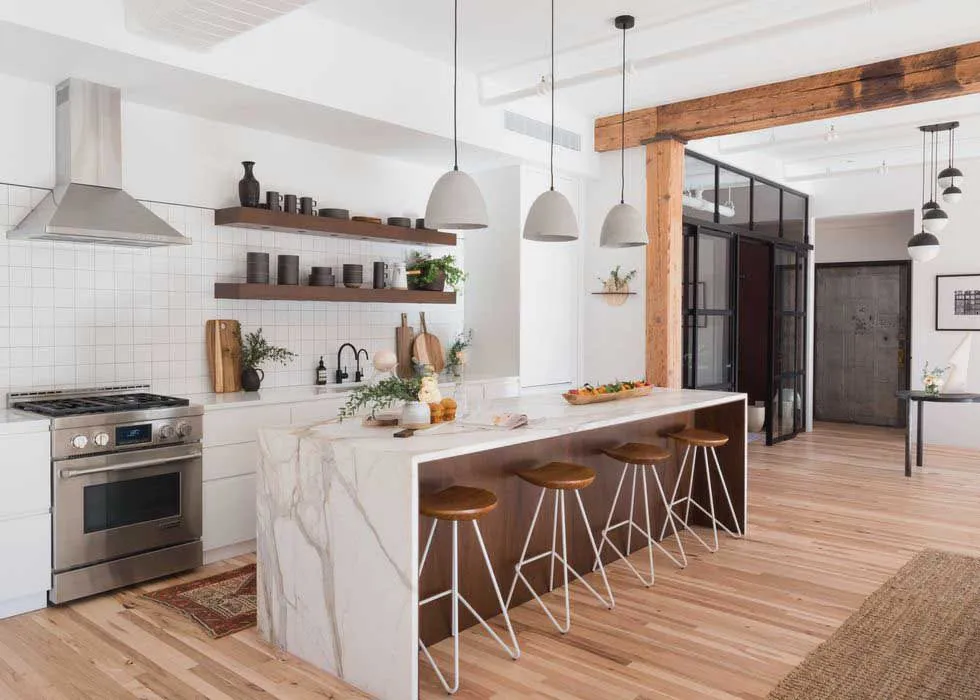
Creating realistic kitchen scenes requires attention to detail and a comprehensive approach to design. In addition to modeling cabinets, countertops, and appliances, incorporate elements such as flooring, walls, windows, and accessories to complete the scene. Utilize a combination of modeling and texturing techniques to create a cohesive and visually appealing environment. Pay attention to the scale and proportion of all objects to ensure that the scene appears realistic. Consider adding realistic details, such as cabinet hardware, kitchen utensils, and food items, to enhance the visual appeal. Pay close attention to how light interacts with the various surfaces within your scene to simulate realistic effects. The scene should tell a story and create the right ambiance.
Key Considerations for Lighting in 3ds Max
Lighting is critical for creating compelling visuals in 3ds Max kitchen decor projects. Begin by understanding the interplay between ambient, direct, and indirect lighting. Ambient light provides a foundational illumination, while direct light, from sources like spotlights or sunlight, defines highlights and shadows. Indirect lighting, often simulated by global illumination engines, bounces light off surfaces, contributing to overall realism. Consider the color temperature of your light sources; warmer tones evoke a cozy atmosphere, while cooler tones feel more modern. Pay attention to light intensity to avoid overexposure or underexposure, which can negatively impact visual quality. The use of IES profiles, which simulate the distribution of light from real-world light fixtures, adds to the realism. Careful lighting design can dramatically alter the mood and impact of your final renders.
Rendering and Post-Processing Your Kitchen Decor

Once your kitchen scene is complete, rendering and post-processing are the final steps in creating your 3D visuals. Choose a suitable rendering engine within 3ds Max, such as Arnold, V-Ray, or Corona, and configure its settings to optimize image quality and rendering speed. Adjust settings like resolution, sampling, and global illumination to achieve the desired level of detail. After rendering, use post-processing software like Adobe Photoshop or GIMP to enhance the final image. Adjust the color balance, contrast, and exposure to improve the overall visual appeal. Add final touches like lens flares or depth of field effects to create a more cinematic look. Regular experimentation with render settings and post-processing techniques helps you refine your workflow and achieve exceptional results.
Exporting and Sharing Your 3ds Max Kitchen Design
Once your kitchen decor design is complete and rendered, the next step is to export and share your work. 3ds Max offers various export options, including image formats like JPEG and PNG for general sharing, and more advanced formats like EXR for professional post-production workflows. If you want to showcase your design in an interactive format, consider using real-time rendering engines or exporting your scene to a web-based 3D viewer. Preparing your design for sharing involves optimizing the file size, ensuring proper texture resolution, and selecting appropriate sharing platforms, whether it’s your website, social media, or client presentations. When sharing, always include relevant details about your design, such as the software used, the design concept, and the overall aesthetic. High-quality visuals and clear communication are critical for showcasing your skills and attracting potential clients or collaborators.